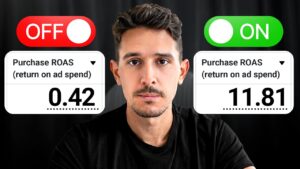
Understand why blended Google ROAS can fall as spending grows
This walkthrough separates branded and non-branded activity to explain a common scaling problem. A campaign average supported by brand demand does not necessarily describe the return available from the next dollar spent on broader acquisition.
Classify the actual search traffic
The analysis reviews search terms across campaigns rather than assuming their names separate brand from non-brand. Record spending and value for each group. Use the same date range so the resulting comparison reflects the actual mix within the account.
Recalculate the return from totals
Divide the conversion value for each group by its corresponding spend. The video then models a change in the mix. When lower-return acquisition receives a greater share of budget, the blended ratio can decline even if each group's own performance stays similar.
Choose a structure that exposes the roles
The proposed system separates brand coverage from acquisition-focused work. Check the current exclusions and customer settings used for that purpose. The aim is clearer measurement and budget decisions, not a claim that a campaign label can identify every new customer perfectly.
Judge growth against an affordable target
Set a return expectation for the activity you intend to expand. Compare additional revenue and contribution with the cost of acquiring it. A lower blended ROAS can be compatible with useful growth, while a high brand-supported average can conceal weak acquisition.