Match Google ads campaign complexity to conversion volume
This account walkthrough uses expected purchase volume to decide how much structure an ecommerce budget can support. The central idea is to avoid dividing a small amount of data across more campaigns than the account can usefully sustain.
Estimate the activity behind the budget
The planning example starts with intended daily budget, store order value, and cost per purchase. Those inputs help estimate the conversion volume available. Use realistic business figures, since a structure based on optimistic assumptions can fragment a smaller account too early.
Avoid unnecessary fragmentation
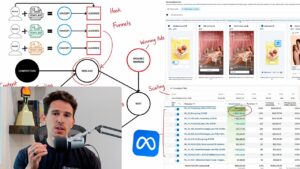
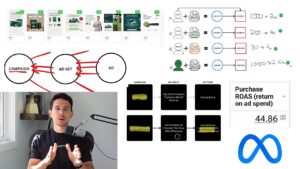
The video contrasts consolidated campaigns with many narrow campaigns receiving only occasional purchases. Each additional split needs a purpose. Keep enough activity together to evaluate results before deciding that every product line or audience signal should have its own campaign.
Separate proven products when volume supports it
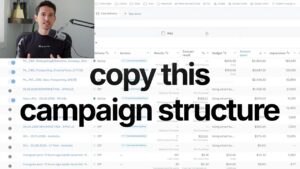
One example introduces best-seller and remaining-product Performance Max campaigns alongside brand search. It gives stronger products more budget while retaining a place for the rest of the catalog. The example allocation illustrates the method rather than a universal ratio for every store.
Add new layers as the account develops
At higher volume, the demonstration adds non-brand search and leaves room for other business-specific campaigns. Use actual results to decide which opportunity comes next. The final structure should reflect the account's products and customer demand instead of a fixed template.