The audience roles behind the 2024 targeting strategy
This lesson combines broad scaling, single-interest tests, and retention targeting. It also emphasizes that the final setup depends on the business. Read the historical interface examples for their intended roles, then confirm the controls available in the current account.
Use the broad campaign for qualified creative
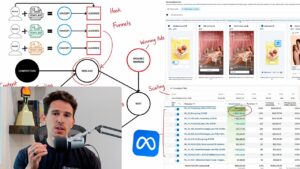
The demonstrated Advantage Plus campaign receives ads already showing useful performance. Its role differs from the prospecting environment where new work is introduced. Keep that distinction visible so a scaling campaign does not become another place for untested uploads.
Keep interest tests focused
The walkthrough uses single-interest groups instead of stacking several interests together. A clearer test can show whether a particular customer pocket is useful. The discussion also challenges assuming a gender-specific product can only influence purchases through one gender.
Choose placements and inventory deliberately
The example reviews placement options and inventory filters rather than treating every setting as irrelevant. Connect those choices to the brand and creative. A tighter restriction can change available delivery, so evaluate its effect instead of assuming it is automatically a performance improvement.
Give purchasers a separate follow-up role
The retention setup focuses on people who have completed a purchase, with a defined audience window. Use the actual customer list coverage and an appropriate message. Retention is different from retargeting a visitor who has not yet transacted with the business.