This is boring. But in the last 180 days, we’ve spent over $35 million in Facebook ads across our portfolio, managing accounts from six to eight figures. And the accounts that scale the most are almost always doing this one thing. Nobody talks about it because it just isn’t exciting.
That thing is country expansion.
Why Most Accounts Feel Stuck
Every day we audit accounts that are set up just fine. Good structure, solid creative, proper targeting. But they hit a revenue ceiling they can’t break through. The issue isn’t their ads. It’s their available reach.
If you’re only targeting one or two countries, it feels like you’re covering the world. You’re not. You’re touching a very small slice of the total addressable market.
But here’s the catch. Add new countries the wrong way and you’ll tank your account. Your return on ad spend drops, impressions spike, spend floods into the wrong places, and suddenly you’re cutting budget just to stay profitable.
The key is doing it in a setup that never forces spend into a new country unless that country is actually performing better than your baseline.
What This Looks Like In Practice
Here’s a real example. In July, we were spending $8,000 to drive $22,000 in revenue at a 2.6x return on ad spend. Solid. About 10 to 12 countries in the mix, with individual country spend ranging from $75 to $2,200.
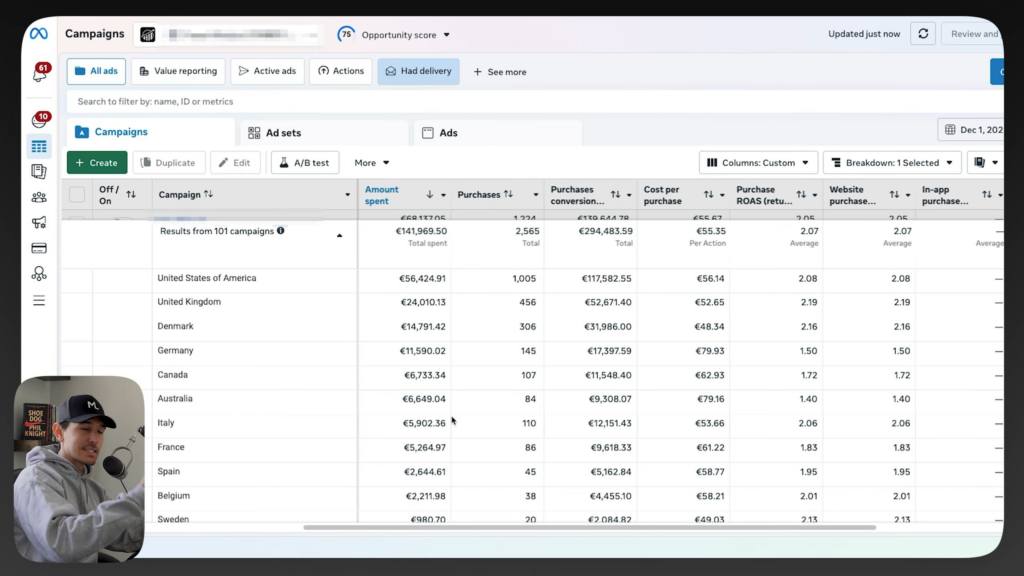
Five months later, with no Black Friday lift inflating the numbers, we were spending $141,000 to drive $294,000 in revenue. We gave up about 10% in return on ad spend. In exchange, we unlocked hundreds of thousands of dollars in new revenue from over three dozen countries we weren’t targeting before. One of those new additions, the United States, alone drove over 1,000 purchases.
The Setup That Makes This Work
You need a prospecting campaign running as a CBO (campaign budget optimization). Inside that campaign, keep your existing adsets exactly as they are. Business as usual. No changes.
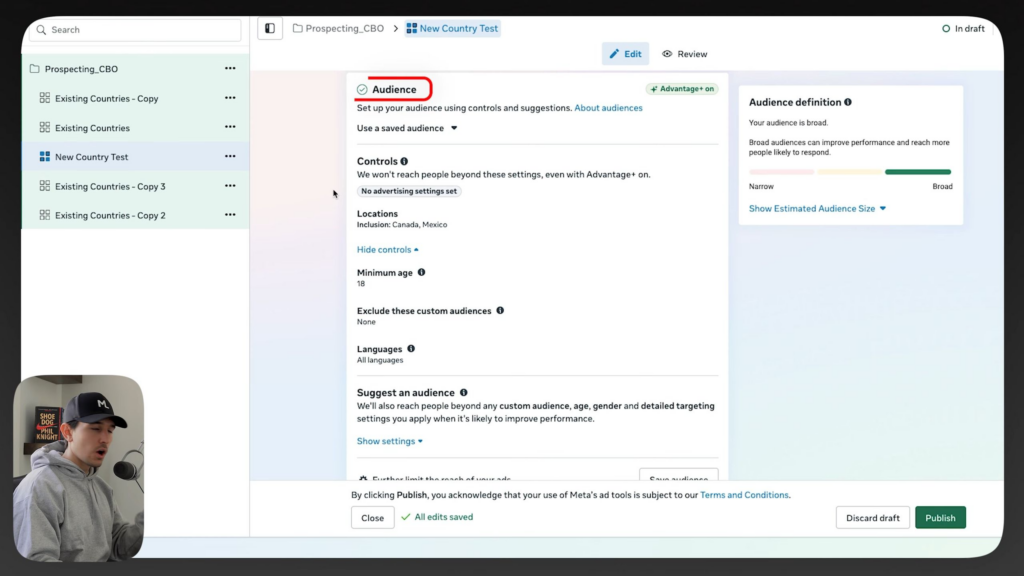
Then create one new adset. Call it “new country test.” Pull your top performing ads from your existing campaigns and drop them in here. You don’t want creative to be a variable. The only thing being tested is location.
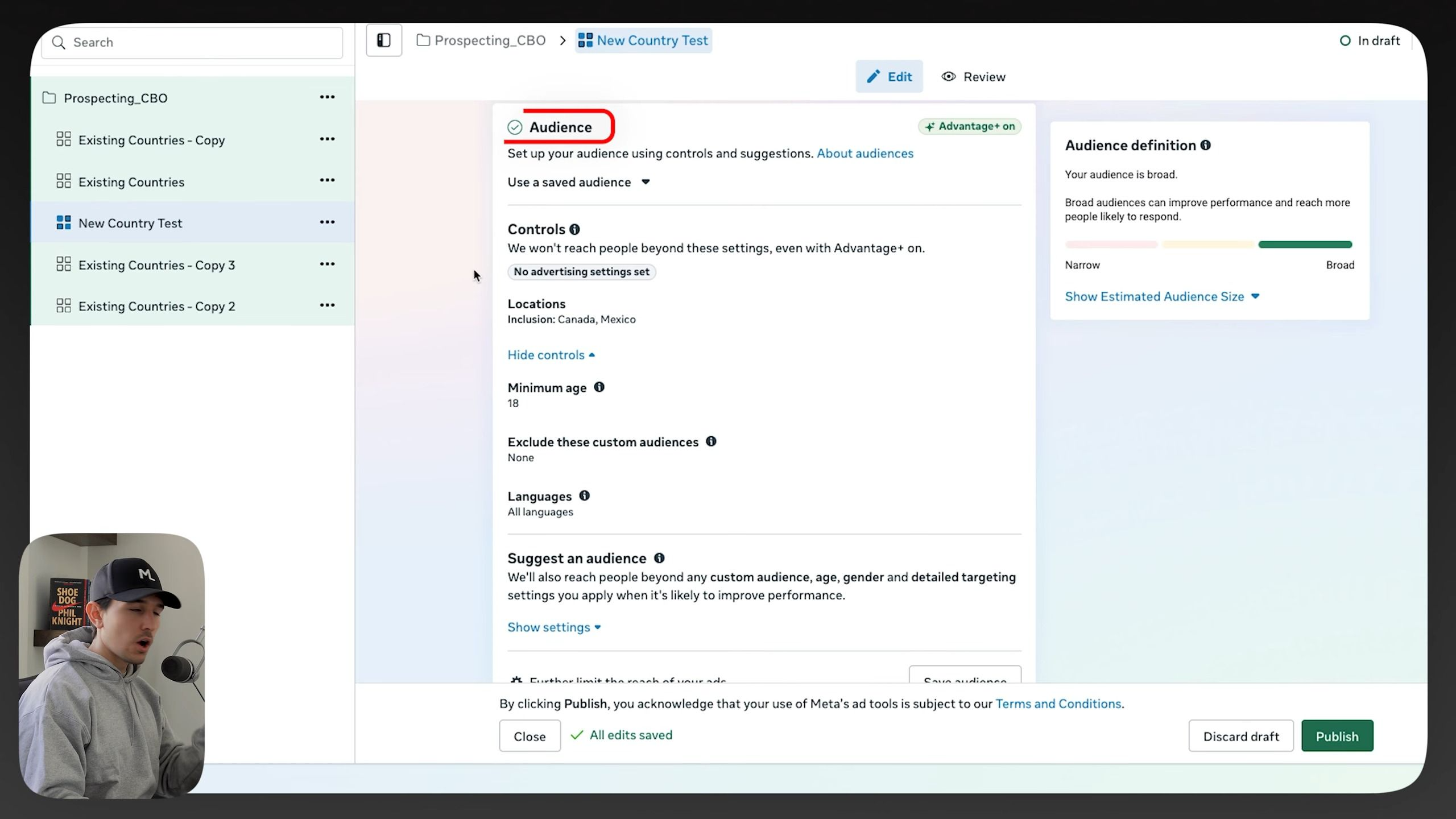
In the audience settings for this new adset, exclude the countries you’re already targeting. Then add every country you can actually ship to.
Now the CBO does the work. It sends budget to whatever adset it thinks will perform best. If the new countries aren’t profitable, they don’t get spend. You’re not wasting money.
If the new adset isn’t getting any spend because it’s a smaller market, set a minimum daily spend limit equal to your CPA. If your cost per acquisition is $100, set a $100 average daily minimum. Run it for 7 to 14 days, then remove the minimum. After that, the adset will either underspend (telling you those markets won’t scale) or overspend (a green light for growth).
The One Setting People Miss
This part matters more than most people realise. In your audience section, there’s a languages setting. If you leave it on “all languages” and you’re running English ads in countries that speak other languages, your performance will suffer. Badly.
Always restrict to the languages your ads are actually written in. For English, select all three options: English All, English UK, and English US.
What To Do Once a Country Proves Itself
When a new country passes the test and is driving real results, fold it into your standard workflow. Every time you launch new creative going forward, create adsets that include both your original countries and the new ones that are working. You’re not rebuilding your account. You’re just expanding what already works.
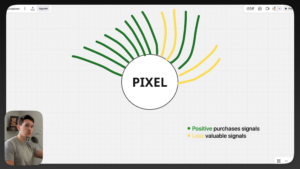
One more thing worth knowing. You don’t need new pixels for any of this. When you geo-target in Facebook, signals are always shared by location. Your US data won’t pollute your UK data and vice versa. Everything stays clean.
The accounts that scale the most aren’t doing something magical. They’ve just stopped treating their home market as the only market. A small amount of setup time can open up a ceiling that most advertisers don’t even know exists.