

Flexible ads were working great. Then they died.
Here’s exactly what happened and what we’re doing now instead.
What Flexible Ads Actually Are
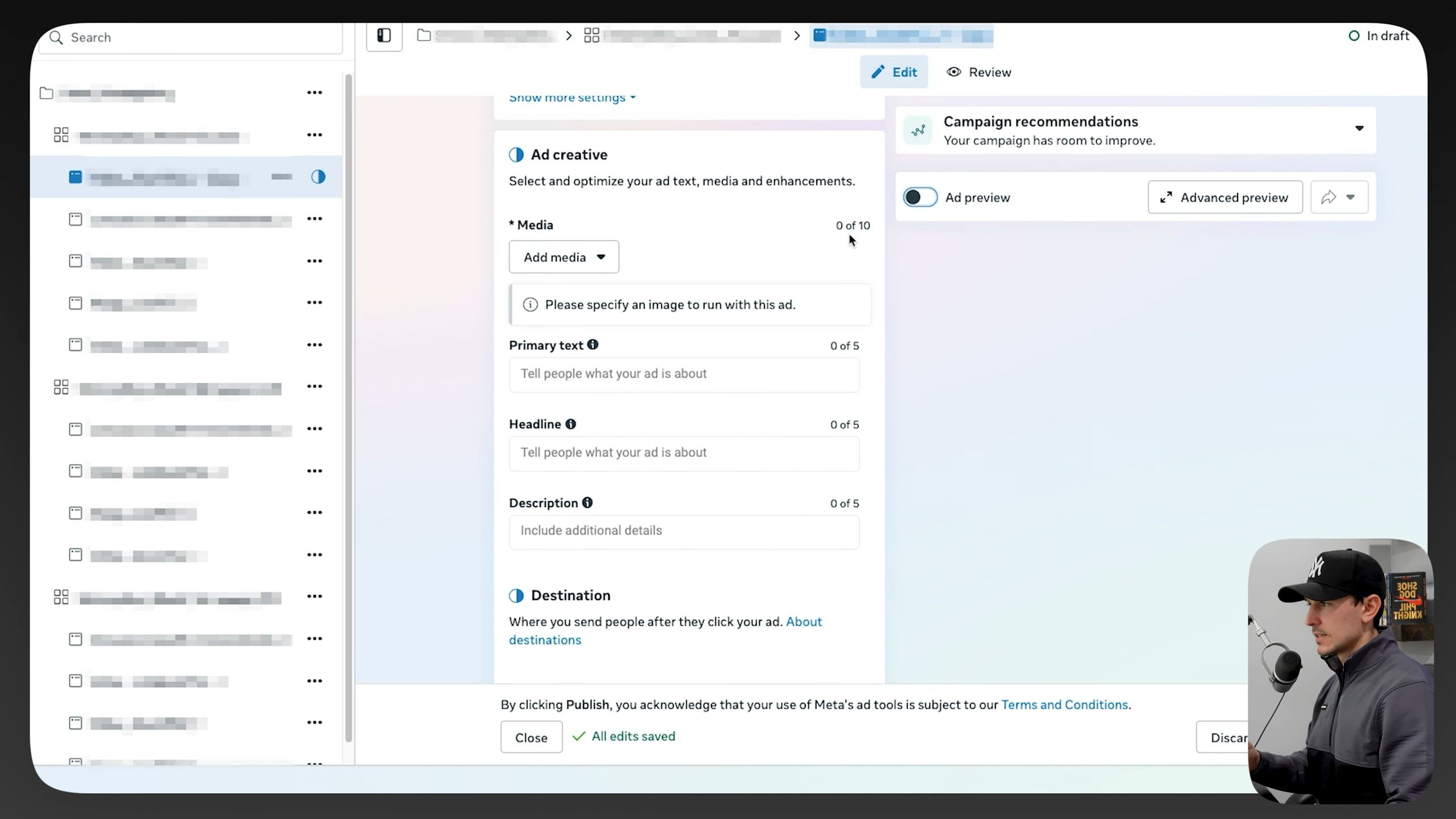
When you go to the ad level in your Facebook account, under ad setup and into the format section, there’s a creative format called the flexible format. It lets you upload up to 10 different images or videos in the same ad unit. The idea is that Facebook crops them to the right formats and serves the best version to the most appropriate people.
For a while, we loved this. What we were doing was uploading a tight batch of iterations inside one flexible ad unit. Five images that looked very similar. Maybe a slightly different headline or a small tweak on the image. We couldn’t see exactly which individual ad performed best, but because the variations were so minor, we didn’t care. We thought of the whole thing as one ad unit.
Where It All Went Wrong
Two problems started showing up in the wild.
First, the carousel problem. When we checked our placement breakdowns, we noticed that flexible ads were sometimes being served as carousels. That sounds fine in theory. But in practice, people were swiping through and seeing basically the same photo with one tiny tweak repeated over and over again. That’s a terrible customer experience. It was never the intention.
Second, the cropping was a mess. Facebook was automatically cropping images in the wrong places constantly. A horizontal image would get cropped off-center or too far up. You can manually adjust crops, but Facebook kept overriding things in ways that just looked wrong.
Q4 was strong with flexible ads. Q1 started looking bad. So we moved on.
What We Do Instead
The shift is simple but the thinking behind it matters. Instead of grouping multiple iterations into one flexible ad unit, we now launch each concept as its own ad set. Every ad set represents one concept, tested through a range of iterations.
So within a single ad set, you might have the same core ad with hook one, hook two, hook three, and a few variations of each. Anywhere from two to around eight iterations in total. All the same concept, just tested in different ways.
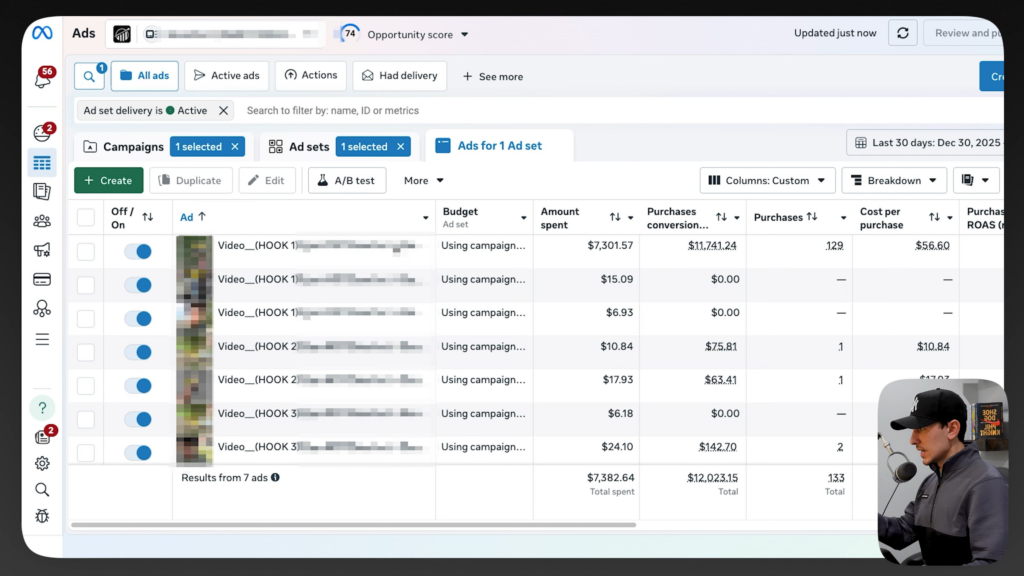
What often happens is one iteration pulls the majority of the spend. That’s fine. It means the algorithm found a winner within that concept. If spend is spread evenly across all iterations, that’s actually a signal that no clear winner has emerged yet.
Make Sure Every Ad Actually Gets a Fair Shot
One thing we’ve been leaning into more and more over the last couple of months is ad set spending minimums. Inside any ad set, if you click edit and scroll down, you’ll find an ad set spending limit. We like to set the average daily minimum to one times the target cost per acquisition.
This guarantees the ad set at least starts spending. You put real time and money into creating that creative. Setting a minimum means it actually gets seen instead of Meta ignoring it entirely.
The Payoff: Clarity
Here’s the real upside of ditching flexible ads. You can actually see what’s working. With flexible ads, performance gets blurred across the whole unit. With this setup, you can sort every ad in the account by spend and look at incremental purchases and incremental ROAS. That tells you clearly which ad is most scalable.
From there, the job is straightforward. Brief more concepts built around what’s already winning. That’s the flywheel. Find a winner, build on it, repeat.
The settings and formats in Facebook ads change fast. What worked 30 days ago doesn’t always hold up. Staying close to what the data is actually showing you is the only reliable way to keep up.


