

Facebook ads have gotten a lot harder since mid-2025.Winning ads are dying in weeks. Some ads get almost no spend at all. And the overall feeling? Complete loss of control.
So we dug in. We analyzed data from 100-plus brands across every category, covering around $70 million in total ad spend. Here’s what we found.
The Andromeda Update Quietly Broke Everything
In the middle of 2025, Meta rolled out what’s known as the Andromeda update. That’s right around when things started going sideways. Spend started shifting into unusual placements. ROAS declined. Ad accounts started behaving in ways we’d never seen before.
Here’s the sneaky part. Most brands had a decent Q4, and that masked the real problem. The volume of holiday buying behavior covered up just how messy the algorithm had become. So brands that started struggling in January 2025 assumed it was something they did wrong in January. It wasn’t. The problem started six months earlier.
The Data Shows a Massive Shift Toward Instagram Reels
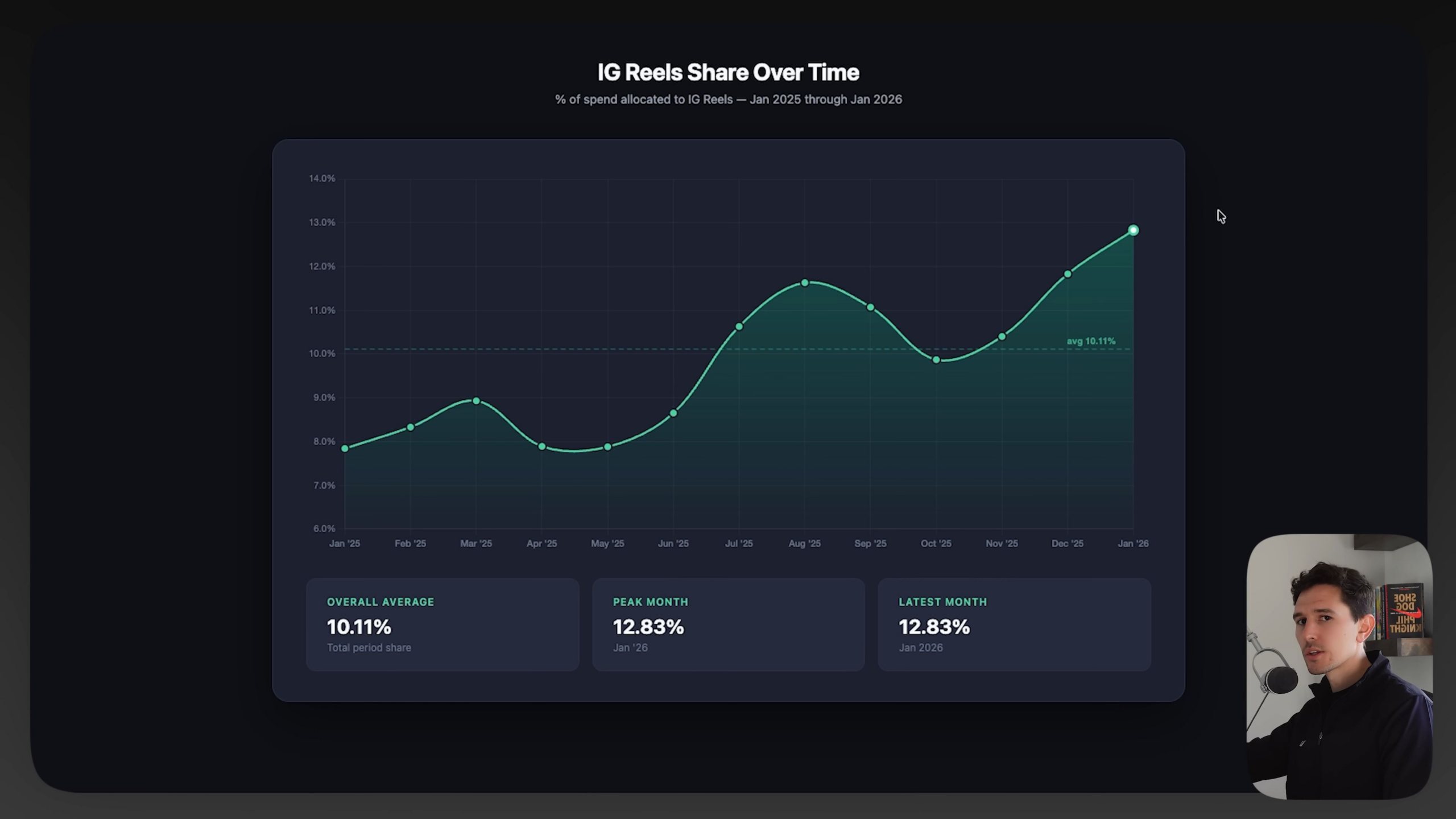
When we plotted placement share by month across all our accounts, things looked mostly stable at first glance. Feed still dominated. Instagram Reels was growing a bit. No big deal, right?
But when we re-plotted the same data as percentage change relative to the start of the year, the picture changed completely.
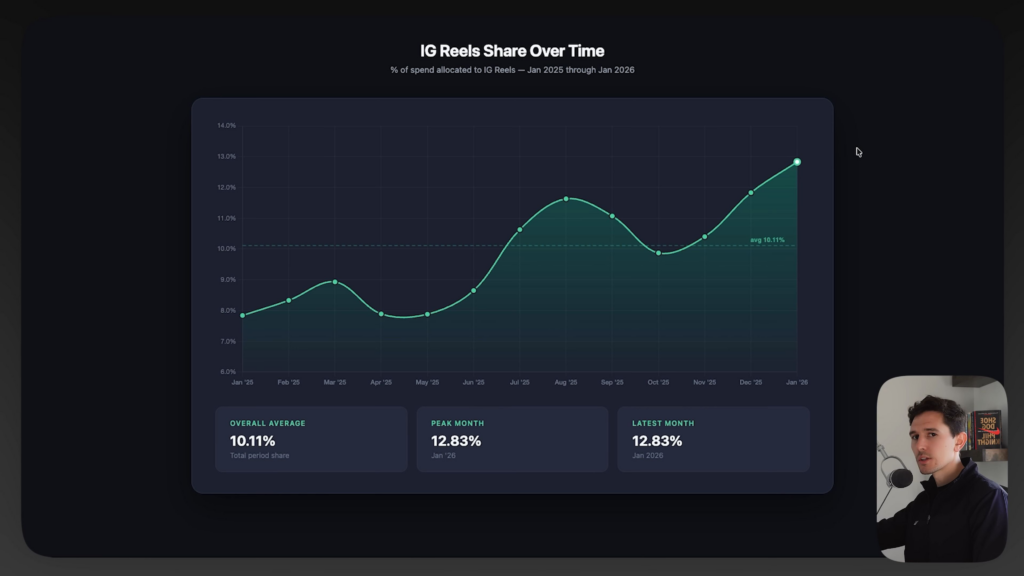
Instagram Reels grew 26% in July 2025 alone, right when Andromeda hit. That trend continued all the way into 2026. In total, Instagram Reels grew 38.86% since January 2025.
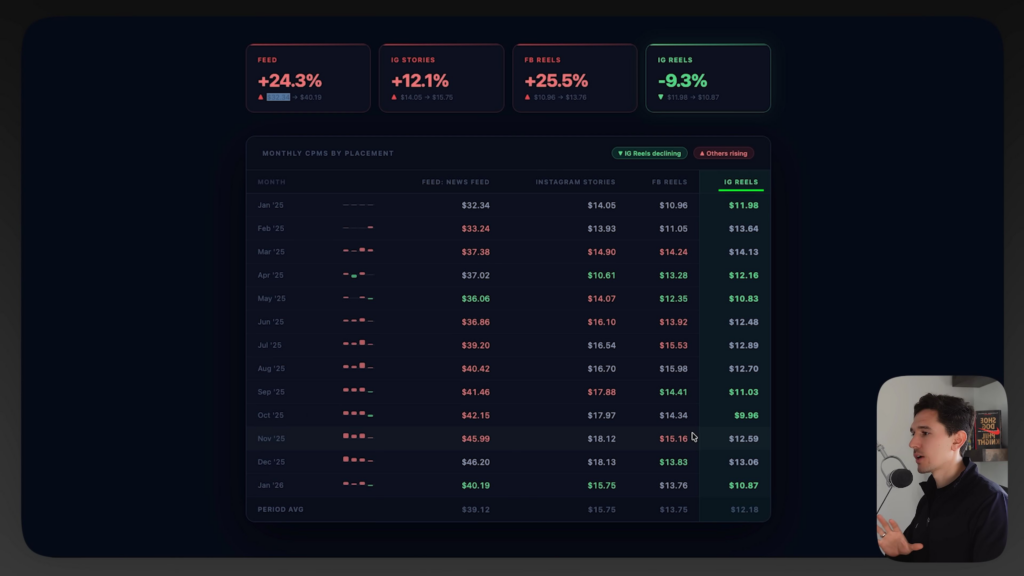
And here’s the kicker. Instagram Reels got cheaper while everything else got more expensive.
- Facebook and Instagram feed CPMs jumped 24.3%, from around $32–34 up to $40.
- Instagram Stories CPMs rose about 12.1%, from $14 to $18.
- Facebook Reels CPMs climbed 25.5%, from $10.96 to $13.76.
- Instagram Reels CPMs actually dropped roughly 9%, ending around $10.87.
A 9% drop might not sound dramatic. But when everything else went up 20%, that relative shift is enormous. Instagram Reels is now the cheapest real estate on the platform.
The Algorithm Is Overspending on the Wrong Audiences
This is the second core issue, and it’s just as damaging as the placement shift.
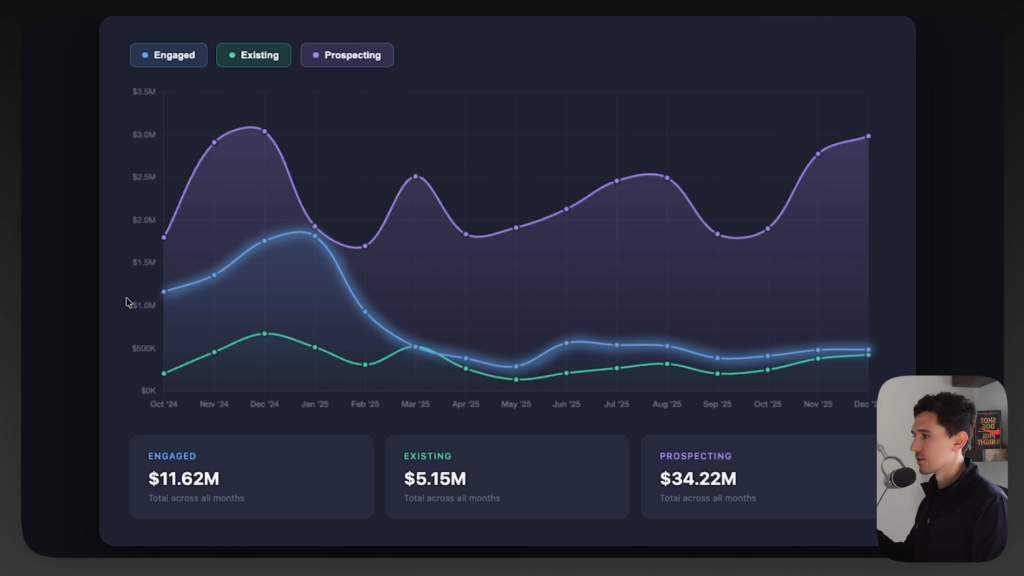
We looked at 10 brands we started working with in Q4 of 2024, tracking $50 million in total ad spend. Before we stepped in, the algorithm was freely spending on engaged and existing customers at alarming levels. In some months, engaged audience spend nearly matched prospecting spend. That’s a serious problem.
Why? Because the whole point of Facebook ads is profitable net new customer acquisition. Spending almost as much to reach someone who already clicked your ad once as you do to reach a brand new customer is not a strategy. It’s waste.
Once we implemented our system, the engaged spend dropped sharply. Existing customer spend stabilized. And here’s what’s notable: we spent less overall and still acquired just as many new customers.
In December 2025 compared to December 2024, we spent $1.2 million less on engaged audiences and $200,000 less on existing customers. Prospecting spend only differed by $50,000. The business results held up. The wasted spend did not.
The Playbook: Control Plus Breathing Room
The fix isn’t to lock everything down or throw everything open. It’s about structured control.
Here’s how we approach it.
Prospecting CBO Campaign. One singular prospecting campaign with multiple ad sets. Each new creative launch gets a 7-day minimum budget to guarantee it gets real spend and real data. After 7 days, the minimum budget is paused and the ad set runs freely. This eliminates the problem of new ads getting zero spend without forcing a bloated testing environment.
Avatars and Concepts. The algorithm has shifted from basic targeting to a for-you style feed, just like organic social. Your ad gets served based on content signals, not just audience parameters. That means grouping your creatives by specific avatar and concept matters more than ever. Instead of pitting creative one against creative four, you think about how an entire avatar and concept cohort performs together.
Retention Campaign. Break out your existing customers. You’ve already acquired them. You should not be spending anywhere near the same amount to get them to buy again as you do to find brand new customers.
Optional Retargeting Campaign. Only break this out if your engaged audience spend is creeping up close to your prospecting spend. That’s your signal to separate the swim lanes.
Scaling Isn’t About Killing the Losers
Old-school Facebook thinking says: find the one ad with the best return and pause everything else. That’s exactly wrong now.
Different avatars and concepts scale differently. One concept might spend $100 at a 4x return. Another might spend $4,000 at a 2x return. Both are above your target KPI. Both deserve to run. The goal is total account growth across all viable concepts, not chasing a single winner.
The algorithm has changed. The opportunity has shifted. But the brands that understand what actually moved, and build their structure accordingly, are still growing.


