Facebook ads do not work the way they used to.
If you’re still running your account like it’s 2023, you’re leaving money on the table and probably killing your own scale without realizing it.
Here’s what actually changed and what we’ve done about it.
The Old Way vs. The New Way
Old-school Facebook was simple. You picked an audience, interest groups, lookalikes, whatever. Then you made ads for that audience. Clean and simple.
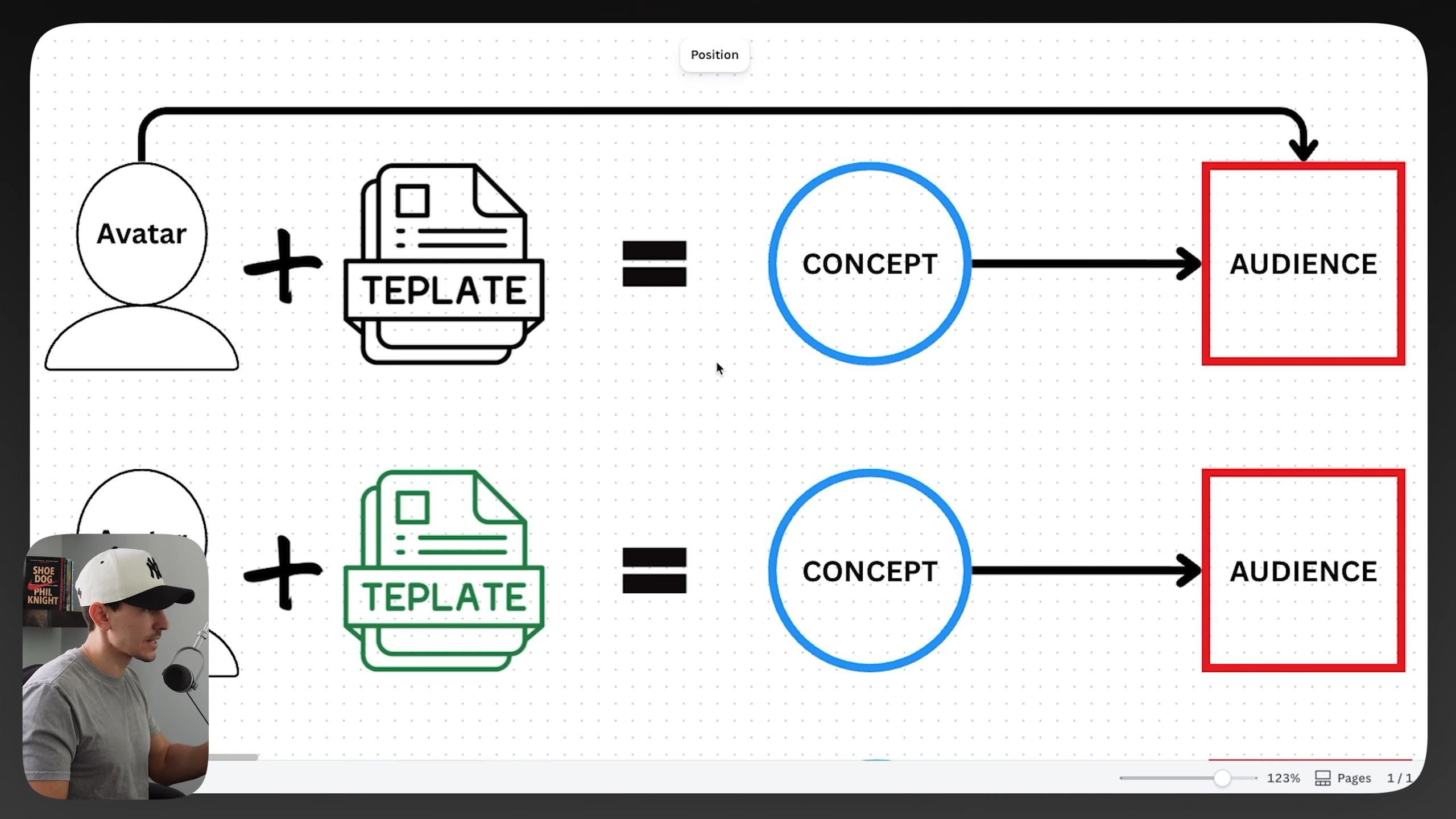
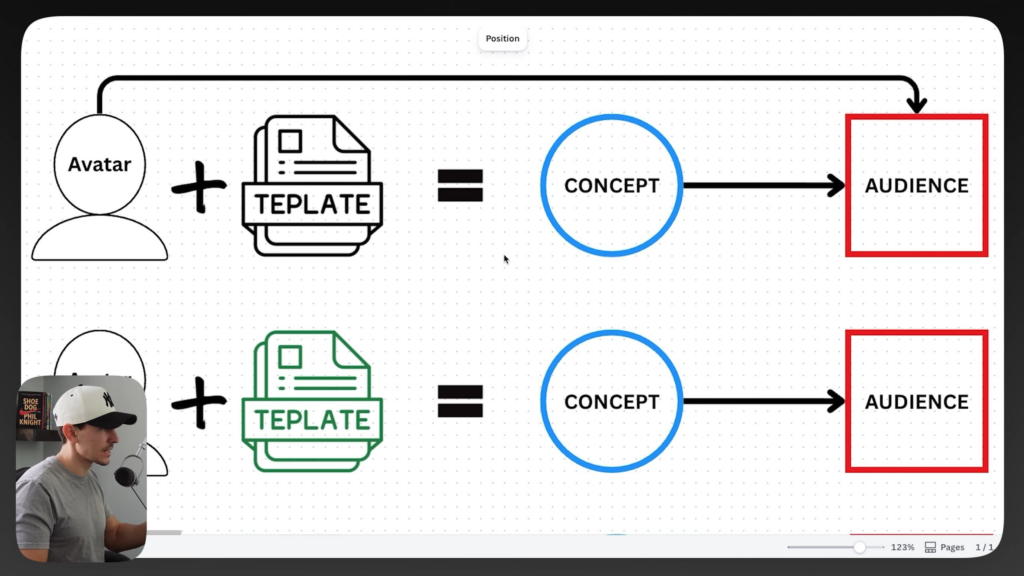
That changed at the end of July 2025 with the Andromeda update. After six months of data, the shift is clear. You are no longer creating ads for an audience. You are creating concepts that get matched to audiences.
A concept isn’t just a new ad idea or a different vibe. A concept is an avatar plus a template. That combination is what Facebook matches to the right people.
Why You Can’t Just Fund Your Best Performer
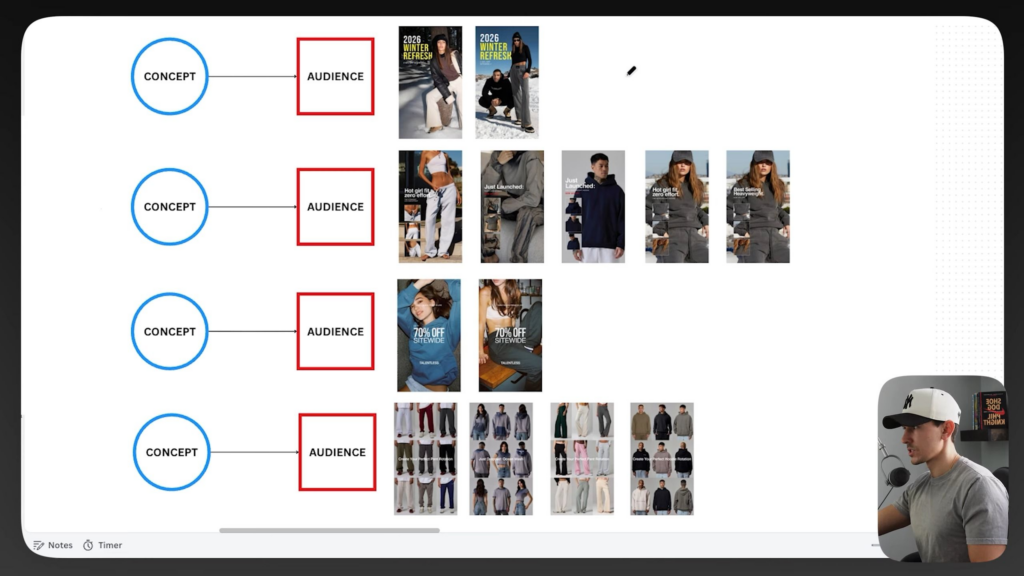
Here’s where most brands get it wrong. Say you have four concepts running. One drives a 7x ROAS, one drives a 4x, one drives a 3x, and one drives a 2x. Old mentality says pour everything into the 7x and cut the rest.
That will destroy your scale.
What we’ve found is that each concept can only spend so much before it hits a ceiling. Your 7x concept might only be able to spend $100 a day. Your 2x concept might be able to spend $1,500 a day. Stack all four together and you have a profitable, scalable account.
Cut the lower ROAS ads and your 7x looks great for two or three days. Then it tanks. Because all those other ads were building the top of funnel that made the 7x possible in the first place.
The New Structure: Pack-Based with Minimum Budgets
We moved away from launching new packs, finding winners, and forcing spend into a scaling campaign. That doesn’t work anymore.
What we run now is a pack-based system with minimum budgets grouped by avatar and concept. This is the core structural change we rolled out across all The Moonlighters’ clients after Andromeda.
Here’s how the minimum budget piece works. At the ad set level, we set a 7-day minimum budget. We pulse spend in for 7 days, then pull back and let the ad run on its own. The reason is simple. Most new ads get almost no spend when they launch. By forcing some spend in the first 7 days, we shortcut the ramp-up period. If the ad is good, it spikes quickly and finds its plateau. If it’s not, it dies fast and we move on.
The testing budget in those 7 days is small compared to what you gain if the ad works. We’ve seen new ads get zero spend or just a few pennies in Andromeda without this approach.
Creative: Go Deep, Not Just Wide
People will tell you iterations don’t matter and you should only chase new concepts. That’s wrong. Look at any growing brand. They’re increasing the total volume of ads, full stop.
What we focus on is finding a concept that works and then going as deep as possible on it. Lots of iterations of a winning concept. Those iterations don’t have to look identical. One might be funny, one more functional. But they target similar avatars and similar templates.
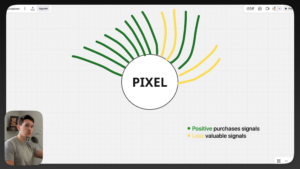
Quality still matters too. Quality concepts will always beat a pile of bad ones. Here’s why. When good concepts reach the right avatars, your pixel sees good purchases. It optimizes toward more of those. Better customers, higher AOV, higher LTV, fewer returns.
When you target the wrong people, you start training your pixel on low-quality customers. Over a 28-day cycle, those bad signals overwrite the good ones. It’s very hard to come back from.
Keep Your Swim Lanes Separate
Prospecting, retargeting, and retention need to be in separate campaigns. If you mix them together, your pixel sees a blend of new and existing customer purchases. Facebook will figure out that existing customers are easier to convert and start optimizing toward them. Then when you go broad, you just keep finding people who already bought from you. That’s how you kill your ability to scale.
We tracked 10 brands from early 2024 through 2026. Before working with us, most were spending too much on engaged and existing customers. After implementing the right structure, prospecting spend increased steadily, spend on existing dropped, and profit went up while total spend went down.
Don’t Overthink the Learning Phase
When we know revenue and profit are there for the taking, we double spend. We don’t inch up by 10 or 12 percent. Spending more just means more people in your impression pool. They have their own average time to buy. You need to be patient, not timid.
The goal is real profit in the bank at the end of the month. Not clean metrics in Ads Manager.
Advanced Moves: Breakdowns and Cost Caps
Once the fundamentals are locked in, we look at day of week analysis and age and gender breakdowns. For example, on Sundays, Fridays, and Saturdays we spend over 30% more in total ad spend compared to Monday through Thursday because our ROAS and cost per acquisition are better on those days. Why give Meta the same budget every day when some days just perform better?
At the $100,000 plus monthly spend level, cost caps become the final tool. Cost caps let you tell Facebook to only buy when it can hit your target cost per result, rather than just spending your budget and finding what it can. It’s the bridge from highest volume bidding to controlled, profitable scale.
If you’re not at that level yet, ignore cost caps for now. Nail the structure, the creative flywheel, and the breakdowns first. That alone will put you ahead of most advertisers running Facebook ads in 2026.