Grun just sold for $1.2 billion. That’s one of the biggest exits in e-commerce history. But the number isn’t even the most interesting part. What’s interesting is how they built their marketing machine to get there.
We’ve managed hundreds of millions in ad spend across e-commerce brands. So when a company like Grun pulls off an exit like this, we study it. We reverse engineer it. And we apply it.
Here’s exactly what we found.
They Scaled Creative Volume Aggressively
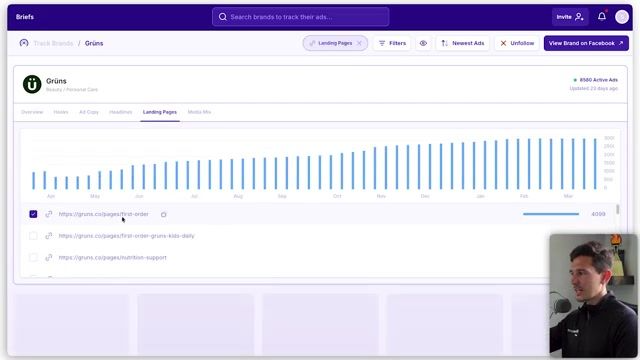
Over the last year, Grun grew their active Facebook ads from around 1,500 to over 8,500. That’s not a typo.
The number itself doesn’t matter. What matters is the principle. The biggest brands keep scaling their creative volume over time. More ads, more diversity, more chances to find what works.
This makes a lot of people uncomfortable. But discomfort with volume is one of the main things holding brands back.
Avatar Targeting Is the Real Unlock
This is the biggest takeaway from everything we found in Grun’s ads library.
The old way of running Facebook ads was interest-based targeting. Lookalikes. Picking an audience and hammering it. That doesn’t work the same way anymore.
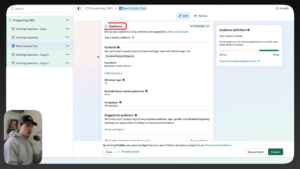
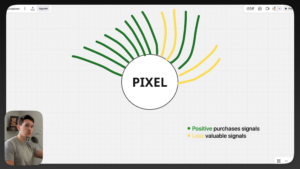
The Andromeda algorithm changed the game. Now, the creative itself signals who the ad is for. So instead of picking an audience in the targeting settings, you build creative for a specific avatar. Andromeda figures out who to show it to.
If you only target one avatar, you keep hitting the same person over and over. But when you build creative for multiple different avatars, your reachable audience grows. Each new avatar opens a new pool of potential buyers.
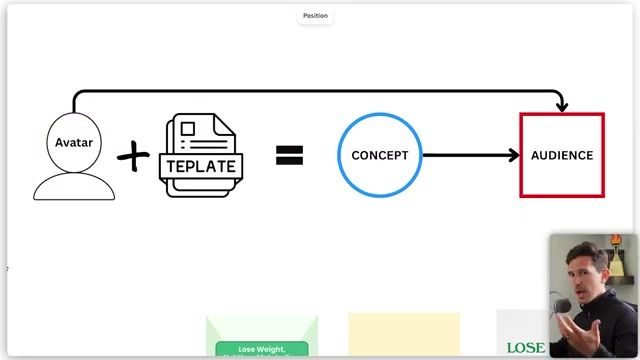
The Buckshot Then Sniper Method
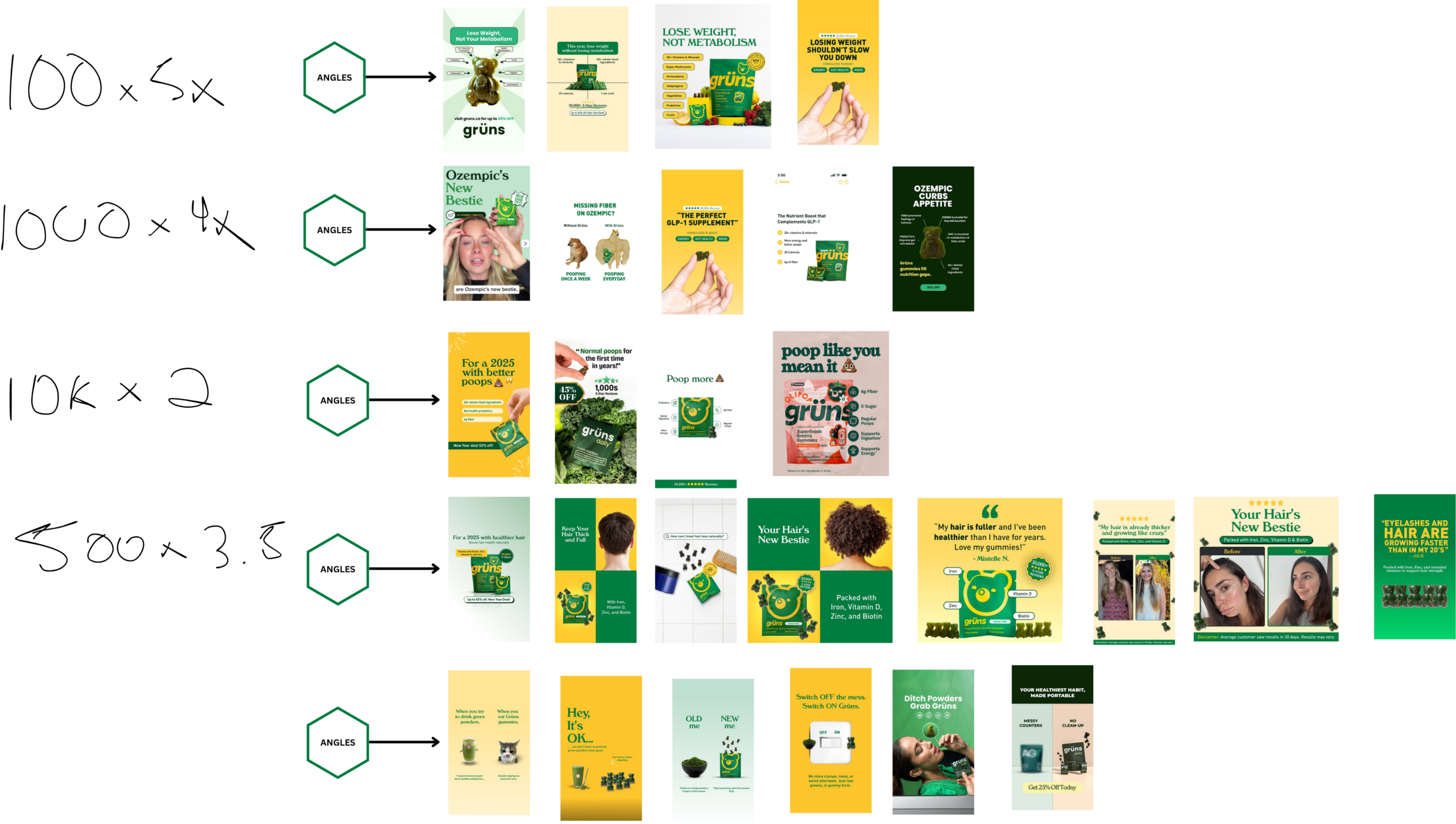
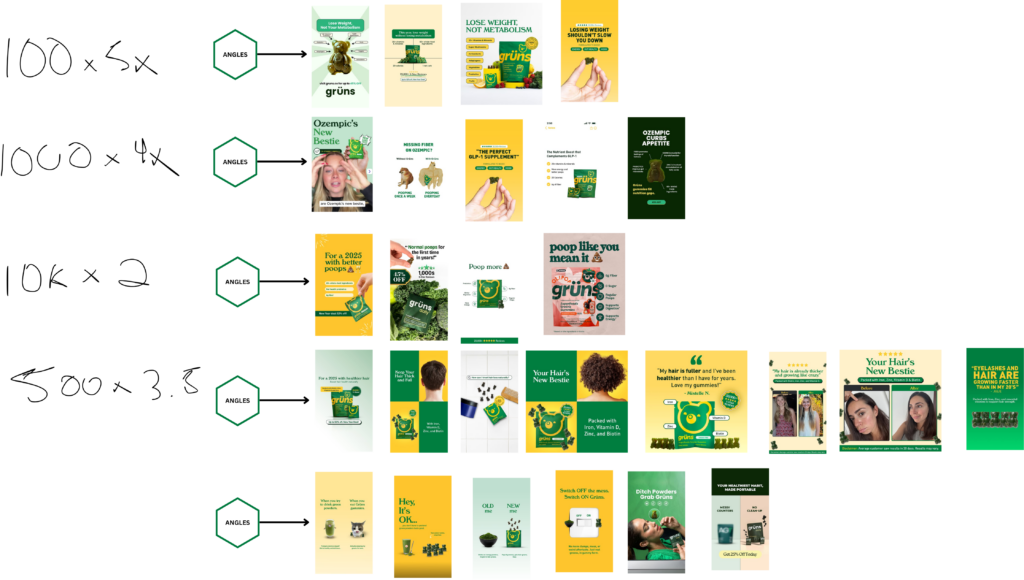
Grun doesn’t just pick one angle and go deep on day one. They spread wide first, then go deep on what works.
From digging through their entire ads library, we identified five core angles they’ve built out.
- Lose weight, not your metabolism
- The pairing angle with GLP-1 medications
- The fiber and digestion angle
- Hair health
- Competitive ads going after brands like Athletic Greens
For each angle that proved itself, they made dozens of versions. Same concept, different templates, different avatars, different visual treatments.
This is the buckshot then sniper approach. Spread wide. Find the angles that land. Then drill down hard.
Not Every Avatar Scales the Same Way. That’s Fine.
Here’s something that trips people up. Different avatar and creative combinations perform very differently.
One combination might spend $1,000 a day at a 2x return. Another might only spend $30 a day but hit a 9x return. Old school thinking says cut everything except the winner. New school says keep everything that’s above your target return.
Grun runs all of them. As long as a combination is hitting your goal, let it spend. You want scale and efficiency, and you get both by running multiple avatars at once.
Their Landing Page Is Deliberately Simple
About 50% of Grun’s ads point to a single landing page that looks almost identical to their homepage. Clean. Focused. Built for the broadest possible audience.
When you click through, you get the core product, millions of reviews, clinical studies, flavor options, and a simple start now button. That button opens a drawer checkout right on the page. No extra steps. No friction.
They’re not trying to be clever. They’re trying to make it as easy as possible for anyone to buy.
What You Can Actually Do With This
Every product solves a problem. Your job is to find every type of person who has that problem and talk to them directly.
That’s it. That’s the strategy.
Identify your avatars. Build creative that speaks to each one. Test wide. Double down on what works. Keep everything that’s above your return goal.
Grun executed this perfectly. And they were rewarded with a $1.2 billion exit to Unilever.
We’ve put together a free document that breaks down exactly how avatars are built so you can deploy this inside your own business. The link is in the description.